Humans—Homo sapiens—first evolved in Africa and were biologically adapted to life in a warm climate. When humans left Africa and began their migrations north into Europe and Asia, they had to adapt to a colder environment. One of the innovations that made this possible was clothing, more specifically, tailored clothing which was made to fit the human body. Tailored clothing required sewing.
At some point in the ancient past, humans invented the sewing needle. In their book From Lucy to Language, Donald Johanson and Blake Edgar report:
“Bone needles almost indistinguishable from modern sewing needles have been found at a 26,000-year-old site in Central Europe, and at western European sites dating to 23,000 years ago in the Solutrean period.”
As humans moved into the industrial age and mass production of goods became more common, the sewing machine was invented. The first sewing machine was invented by a French tailor, Barthélemy Thimmonier. While he was soon producing military uniforms with his new machines, his innovation was strongly opposed by professional tailors who destroyed his machines and drove him out of town.
The next step in developing a sewing machine happened in Boston, Massachusetts. Machinist Elias Howe patented his sewing machine in 1846. He then tried to sell his new machine to American manufacturers. In his book Extraordinary Origins of Everyday Things, Charles Panati reports:
“Impressed as American manufacturers were, they balked at the machine’s three-hundred-dollar price tag, and they also feared the threats by organized groups of tailors and seamstresses.”
Disheartened and destitute, Elias Howe took his family to England. While Howe was in England, another Boston machinist, Isaac Singer, patented a superior sewing machine which sold for about $100. The Singer machine, however, used the special stitch which Howe had patented. The court case between Howe and Singer lasted until 1853, at which time the courts awarded Howe a royalty on every Singer machine sold.
For homemakers, one of the things that made sewing machines more practical was the sewing pattern.

According to the Heritage Museum in Astoria, Oregon:
“In 1863, Ebenezer Butterick created the first graded sewing pattern, making it more convenient and cheaper for women to sew their own clothes at home.”
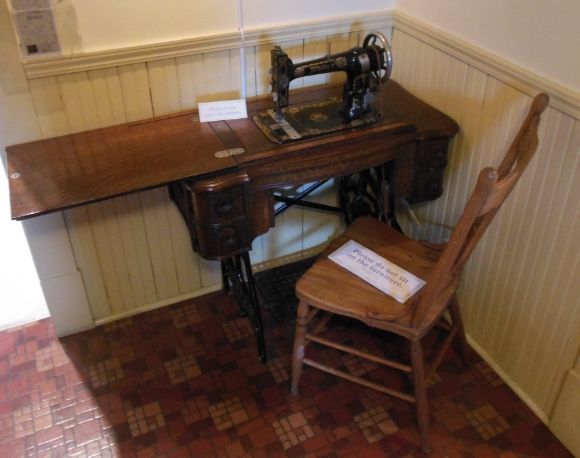
Shown below are some of the sewing machine museum displays.
Polson Flathead Lake Museum, Polson, Montana
 Shown above is a 1916 Singer sewing machine.
 The Singer sewing machine.

 Shown above is a Wheeler and Wilson Sewing Machine.
According to the Museum:
“The Wheeler and Wilson Company was one of the great early pioneers of the American sewing machine industry. The company was formed in 1851, manufacturing machines at their factory in Watertown, New York. The company moved to Bridgeport, Connecticut in 1856 and was renamed the Wheel and Wilson Manicuring Company. They continued in production until they were taken over by the Singer Company in 1905.”
 Wheeler and Wilson Sewing Machine
 Shown above is a Singer Treadle Sewing Machine. Museum visitors are invited to sit and experience the work of the Singer Treadle Sewing Machine. It does not have a needle, but visitors can work the treadle to see how the machine works.
Montana Museum of Work History, Wye, Montana


La Center Historical Museum, La Center, Washington


Quincy Valley Historical Society Museum, Quincy, Washington


Pioneer Village, Cashmere, Washington
 Shown above is the sewing machine in the millinery shop.
 Shown above is the sewing machine in the saddle shop.
LeMay Family Collection, Tacoma, Washington

WAAAM West, Vancouver, Washington
Note: this is actually a car museum.

Lake Chelan Historical Society Museum, Chelan, Washington


Methodist Parsonage, Willamette Heritage Center, Salem, Oregon
The Methodist Parsonage, constructed in 1841, was originally the living quarters for the missionaries involved with the Oregon Mission Manual Labor School that would be built on the present-day campus of Willamette University in Salem. In 1844, the mission was disbanded, and the building became the parsonage for the Methodist Church. Today the Parsonage is at the Willamette Heritage Center.
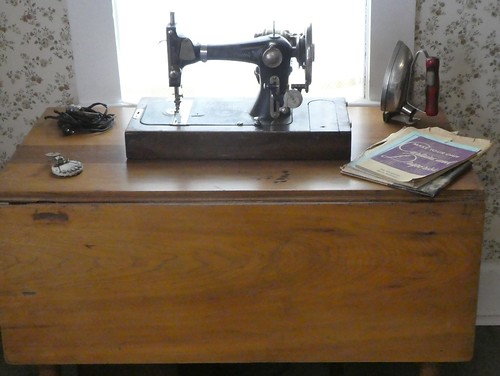
Stevensville Historical Museum, Stevensville, Montana

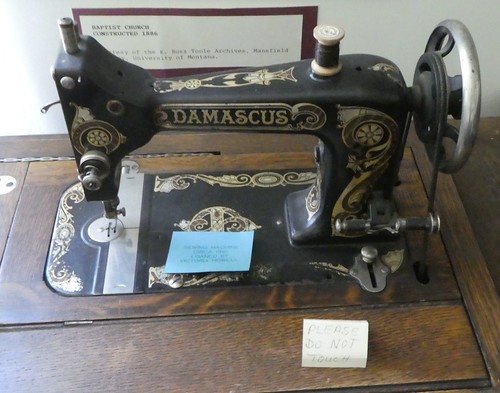
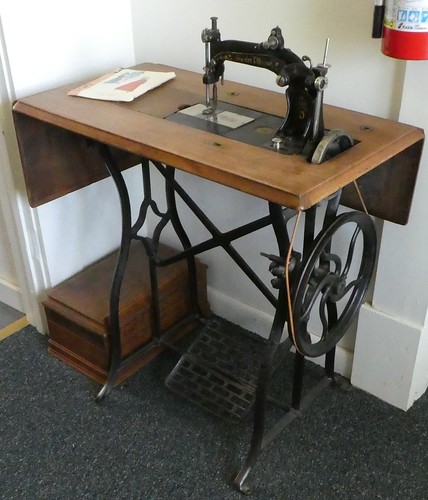
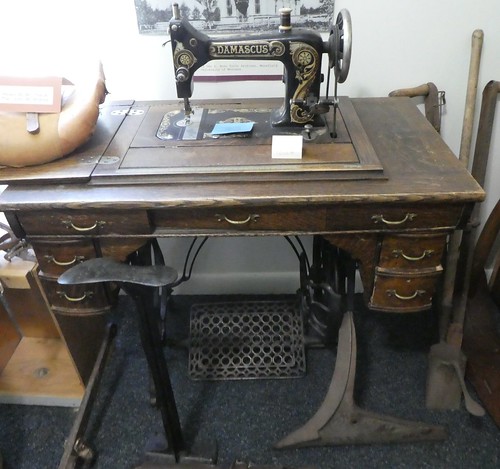
Deschutes Historical Museum, Bend, Oregon
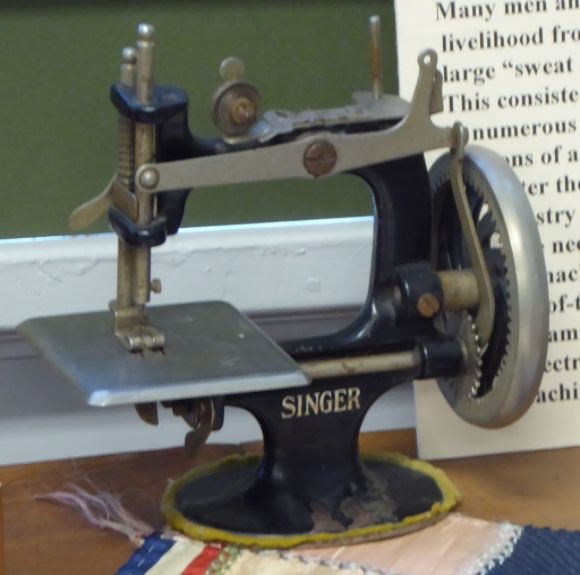
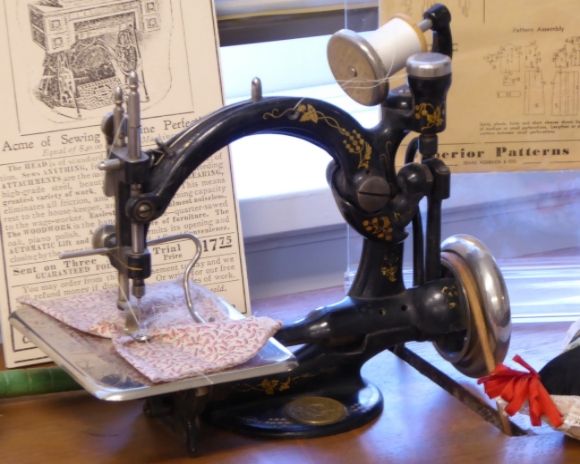
According to the Museum display:
“Although the needle was in use 40,000 years ago, it wasn’t until the year 1830 that the first sewing machine came into use. A tailor could make about thirty stitches a minute—the simplest machine made 200 stitches a minute! Tailoring was such a big business at the time that the originator of the machine (in France) was run out of town and his factory destroyed. Unfortunately, he never recovered from the loss and died in poverty.”
Wenatchee Valley Museum, Wenatchee, Washington
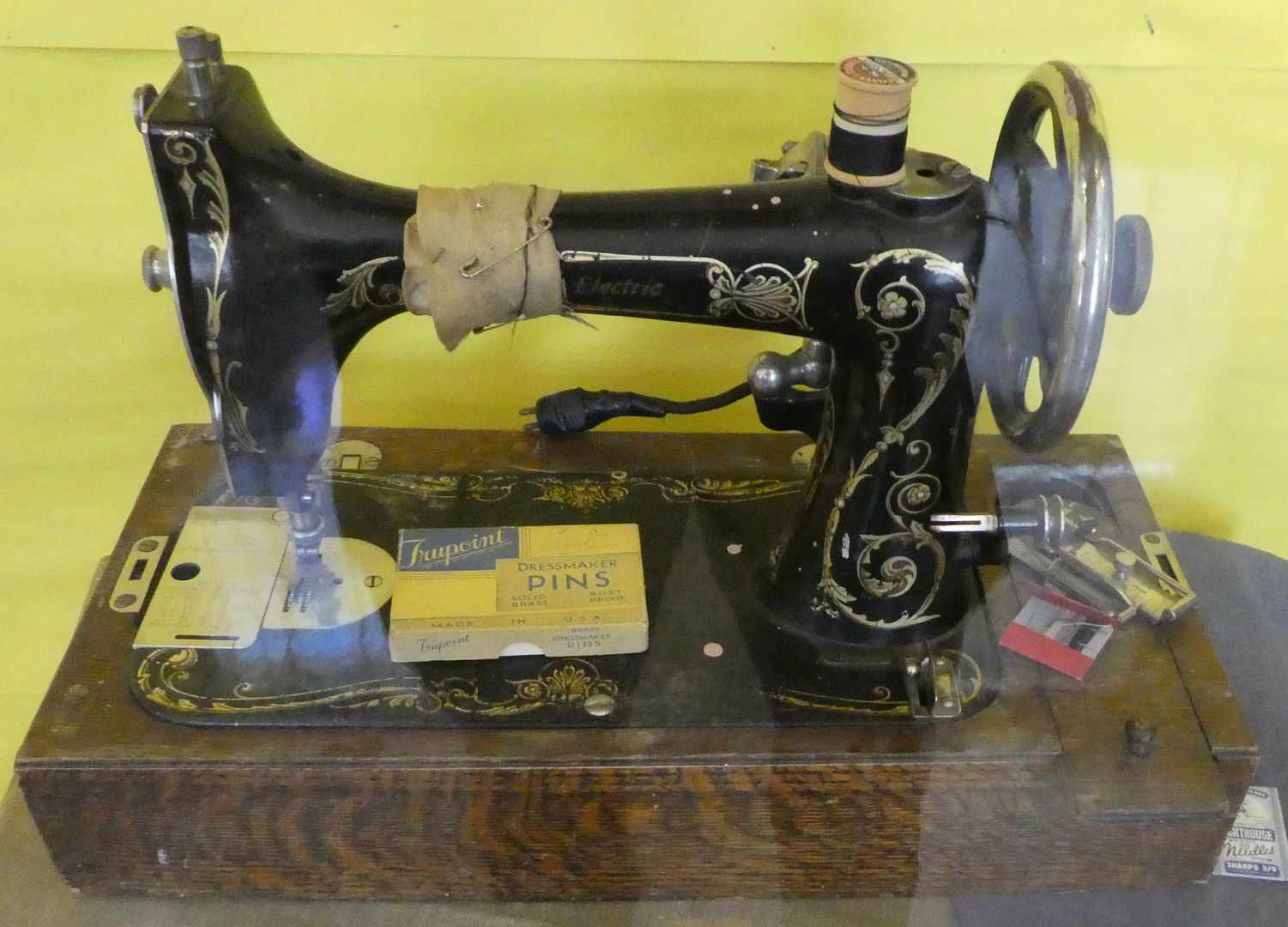
Hagerman Valley Historical Museum, Hagerman, Idaho
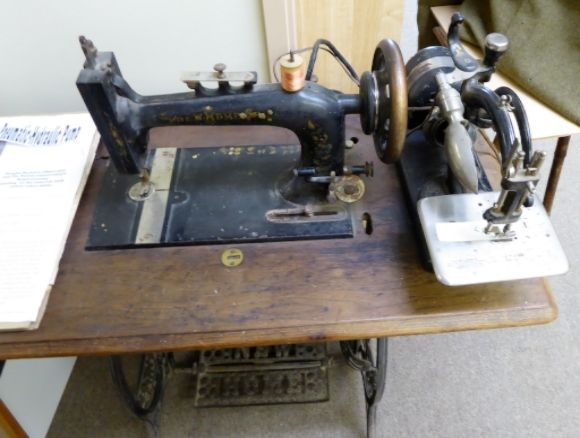
East Benton County Museum, Kennewick, Washington
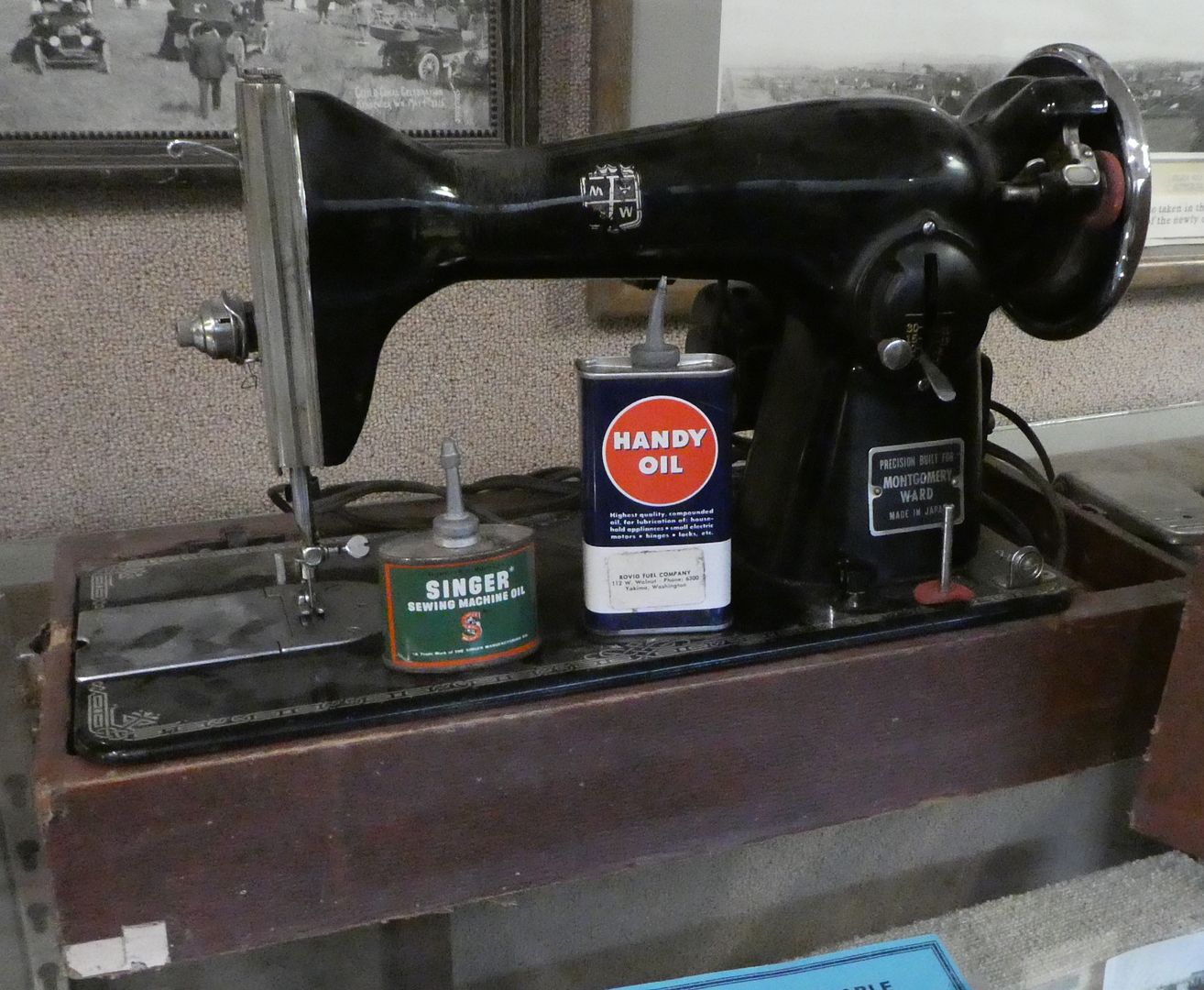 Shown above is a Montgomery Ward portable sewing machine.
Historical Museum at Fort Missoula, Missoula, Montana
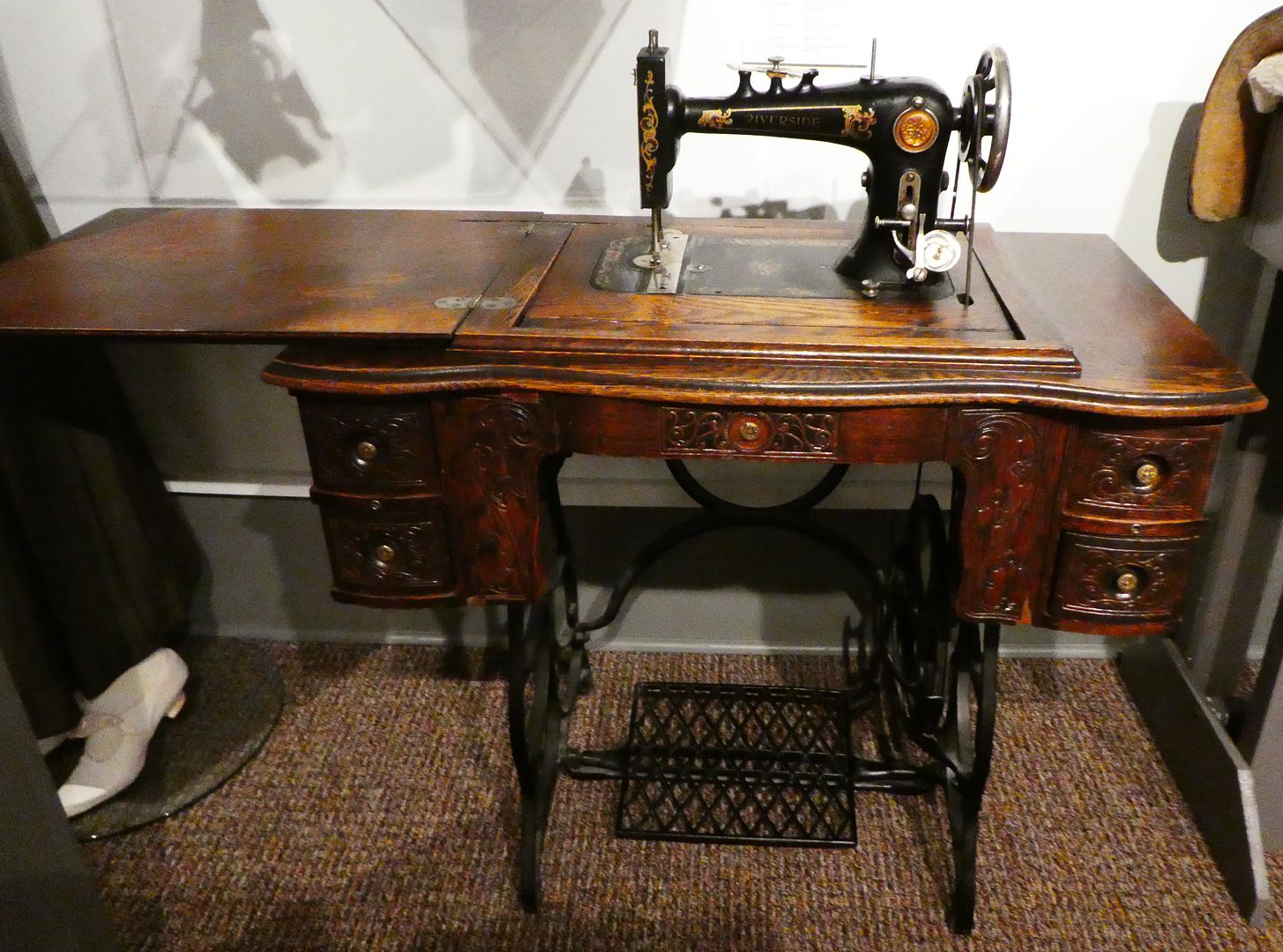
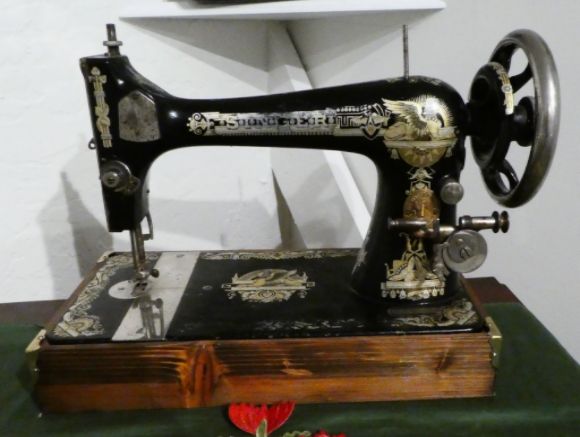 Shown above is a 1906 Singer Sewing Machine.
Fort Steele Heritage Village, British Columbia
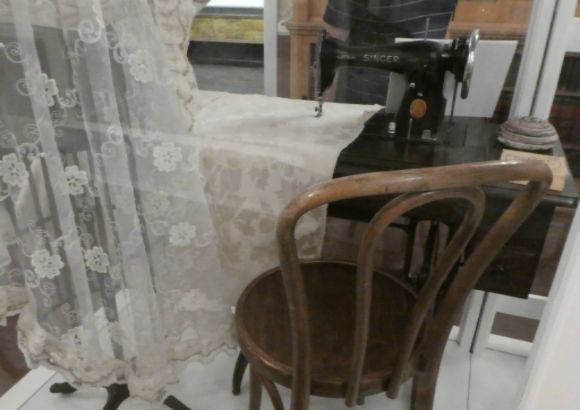
Nevada City Living History Museum, Nevada City, Montana
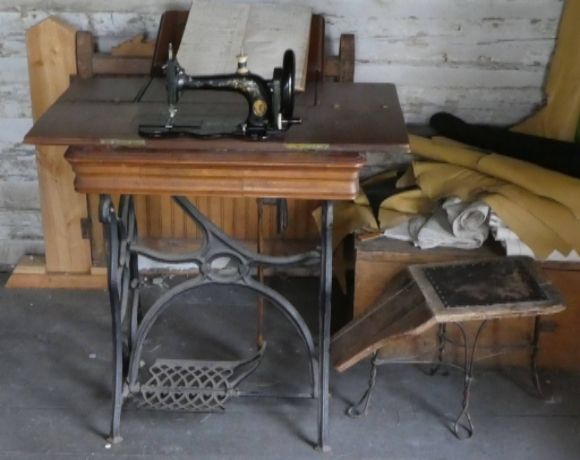
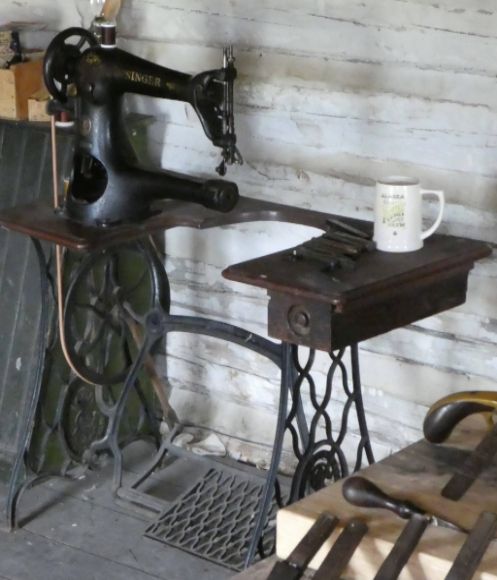
Sedman House, Nevada City Living History Museum, Nevada City, Montana
Wells Hotel, Garnet Ghost Town, Montana
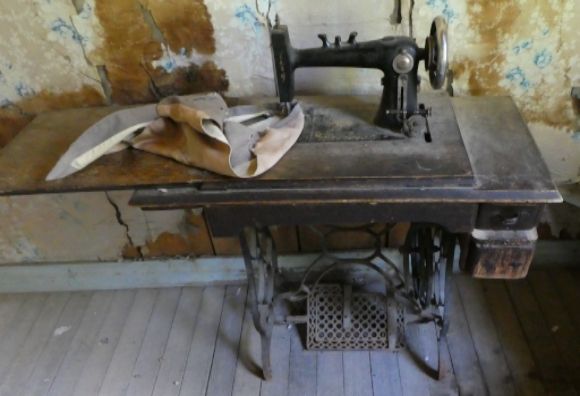
Hulda Klager Farmhouse, Woodland, Washington
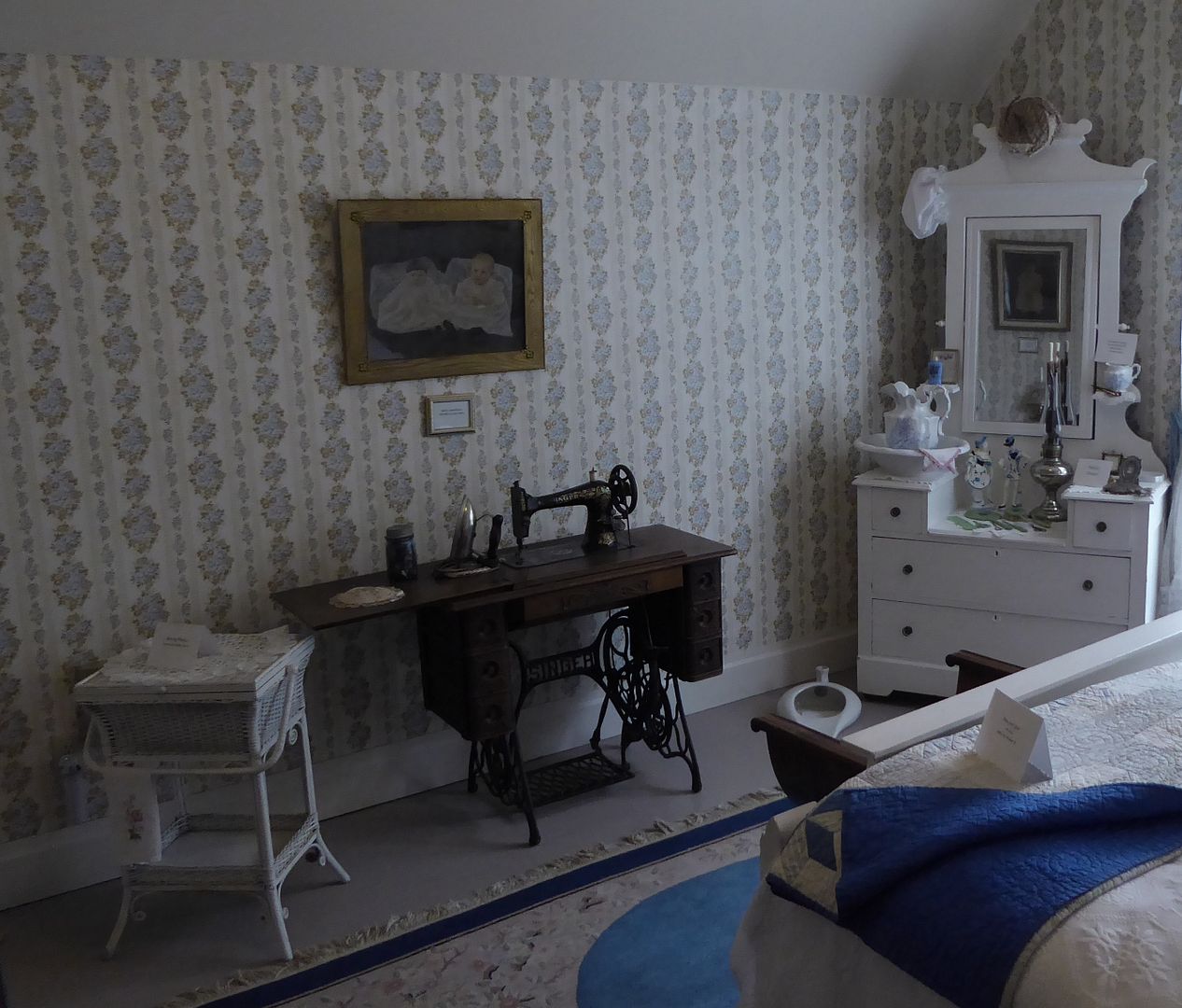
Miracle of America Museum, Polson, Montana
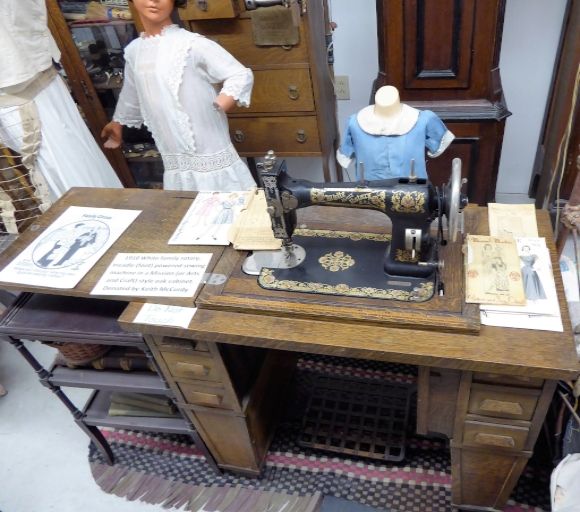 Shown above is a 1910 White family rotary treadle (foot) powered sewing machine.
National Museum of Scotland, Edinburgh
Heritage Museum, Libby, Montana
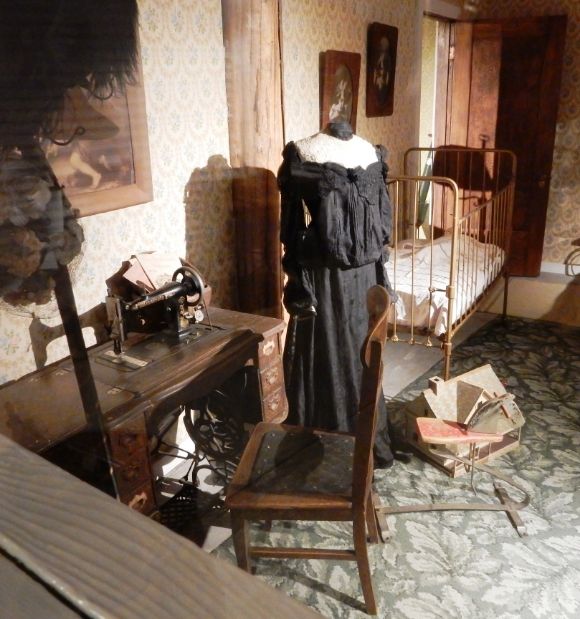
Renton History Museum, Renton, Washington
More museums
In this series, similar exhibits from several museums are shown.
Museums 501: Typewriters (photo diary)
Museums 501: Blacksmith Shop (photo diary)
Museums 501: Wood-fired kitchen ranges (photo diary)
Museums 501: Kitchens (photo diary)
Museums 501: Schools (photo diary)
Museums 401: Hats (photo diary)
Museums 401: Upright Pianos (photo diary)
Museums 301: Telephone switchboards (photo diary)